+92-21-32514321

Wallet Security After the Click: Managing DeFi and Cross-Chain Risk with Rabby
Imagine a US-based DeFi user named Maya moving funds before a weekend trade. She opens a bridge, selects a token on one network and a destination on another, then connects her wallet to what appears to be a familiar application. The quoted amount looks reasonable. The transaction fee is small. She approves the request without noticing that the destination contract is not the bridge she intended to use, or that the “approval” gives a contract permission to spend far more than the current trade requires.
This is not a failure of cryptography in the dramatic sense. It is a failure of context. The wallet may protect the private key perfectly while the user signs a transaction whose consequences are misunderstood. That distinction is central to DeFi security. A wallet is not merely a digital key ring; it is the last review point between a user and an open, programmable financial system. Browser-extension wallets such as Rabby are useful partly because they aim to make that review more intelligible, but no interface can turn an uncertain transaction into a safe one by itself.
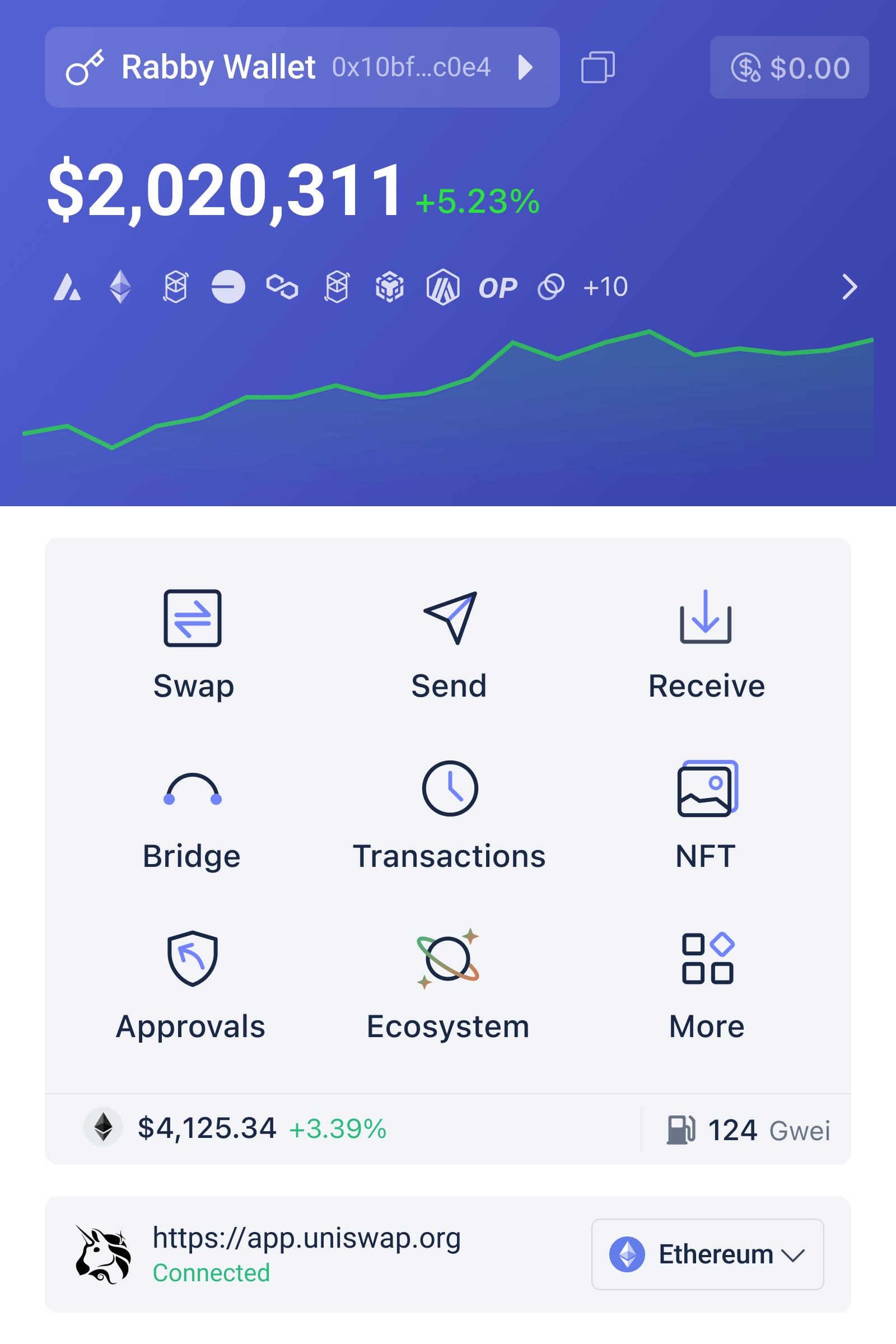
The real attack surface is larger than the private key
When people hear “wallet security,” they often think first about seed phrases, phishing, and malware. Those threats matter. A compromised seed phrase can give an attacker direct control of the account, while malicious browser extensions or fake downloads can intercept credentials or manipulate what a user sees. Yet DeFi adds another layer: the user can retain exclusive control of the key and still authorize an economically harmful action.
That happens because blockchain transactions are instructions, not simple payments. A request may call a smart contract, change an allowance, sign a permit, deposit assets into a protocol, or interact with a bridge that relies on several contracts and off-chain components. The wallet can verify that the user controls the account. It cannot, by private-key ownership alone, guarantee that the contract will behave as the user expects.
A useful mental model is to separate three questions. First, who controls the key? Second, what exactly will this signature authorize? Third, what assumptions must remain true after the transaction is confirmed? The first question is custody. The second is transaction integrity. The third is protocol and system risk. Good operational security addresses all three instead of treating “self-custody” as a complete answer.
This is why downloading a wallet from a trustworthy source and installing the browser extension carefully is only the beginning. Users should confirm the publisher, avoid search-ad lookalikes, protect the recovery phrase offline, and never enter that phrase into a website claiming to “synchronize” or “validate” the wallet. If a user is setting up the software for the first time, the official installation path for the rabby extension should be checked directly rather than reached through an unsolicited message.
Why transaction simulation helps—and where it stops
Wallet interfaces can improve safety by translating raw contract calls into a more readable preview. A user may be shown the token being spent, the asset expected in return, the network involved, and warnings associated with a contract or approval. Simulation can go further by estimating what the transaction would do under current conditions before it is submitted. These tools reduce a dangerous gap between what the blockchain receives and what a human thinks they are signing.
The improvement is meaningful, but it is not a security guarantee. A simulation is a model of an outcome under particular assumptions. The state of a decentralized exchange can change between simulation and confirmation. Slippage may be affected by another trade. A bridge may depend on validators, relayers, message verification, or a separate destination-chain process. A malicious contract may also behave differently under conditions that a preview does not fully capture.
The non-obvious lesson is that a warning system is best understood as a decision aid, not an automated referee. A clean preview means the transaction appears consistent with the information available to the wallet and its analysis. It does not prove that the protocol is solvent, the bridge is decentralized, the token is redeemable, or the market price is fair. Conversely, a warning may reflect uncertainty, unusual contract behavior, or incomplete reputation data rather than a confirmed exploit. The right response is investigation, not blind panic or automatic dismissal.
Users should pay special attention to approvals. An approval does not necessarily transfer tokens immediately; it can authorize a contract to spend them later. That creates a time dimension to wallet risk. A user may make a legitimate trade today and remain exposed if the allowance is excessive, the protocol is upgraded, or the contract is compromised later. Where practical, limit approvals to the amount needed, review existing allowances periodically, and distinguish a one-time transaction from a permission that persists.
Cross-chain swaps multiply assumptions
A cross-chain swap can look like one action in a polished interface, but operationally it may involve several steps: a source-chain transaction, a liquidity provider or bridge mechanism, message transmission, a destination-chain transaction, and the receipt or release of an asset. Each step introduces its own failure modes. The source transaction can succeed while the destination step is delayed. The asset received may have a similar name but a different contract address. A bridge can function technically while still concentrating trust in a small validator set or administrative key.
“Cross-chain” therefore does not mean simply “the same transaction on two networks.” It means the user is asking multiple systems to agree on an economic outcome. The security question shifts from “Is this wallet protected?” to “Which parties and mechanisms must work correctly for my intended result to occur?” That could include a smart contract, a bridge operator, a liquidity provider, an oracle, a relayer, and the user’s own ability to identify the correct destination asset.
Before confirming a cross-chain transaction, verify the source network, destination network, token contract, amount received after fees, and whether the route uses a native asset or a wrapped representation. Also check whether gas will be available on the destination chain. Receiving a token successfully is not the same as being able to move it, trade it, or redeem it. A wallet may display an asset while the user lacks the network’s native token needed for the next transaction.
There is a trade-off between convenience and independent verification. Aggregators can search routes and save users from manually interacting with several protocols. That reduces friction and, in some cases, the number of decisions a user must make. But it also compresses complexity into a single approval flow. The easier the route appears, the more important it becomes to inspect the underlying contracts, fees, and expected output rather than treating convenience as evidence of safety.
For larger transfers, a staged approach is usually more defensible than a single leap. Send a small test amount, confirm that the destination asset and network are correct, and only then consider the larger transaction. This does not eliminate smart-contract, bridge, or market risk. It limits the amount exposed while the route is being validated. The approach may cost more in fees and time, so it is most valuable when the potential loss is material relative to those costs.
A practical security workflow for DeFi users
Security is less about one perfect tool than about interrupting predictable mistakes. Before connecting a wallet, confirm the domain through a trusted bookmark or a known official channel. Be wary of urgent requests, “support” agents, airdrop claims, and pop-ups that ask for a recovery phrase. A legitimate application should not need the seed phrase to connect to a wallet.
When the wallet presents a transaction, read the action rather than just the dollar value. Is it a transfer, swap, approval, permit, staking deposit, or contract interaction? Which contract receives the call? Is the spender the protocol you intended to use? Does the amount match the trade? Are there unexpected recipients, approvals, or changes to permissions? If the request is difficult to interpret, that is a reason to pause, not a reason to click through quickly.
Separate experimental activity from long-term holdings. A dedicated wallet for unfamiliar protocols can reduce the blast radius of an approval or a malicious interaction. Hardware signing can add protection against certain forms of malware and remote key theft, although it cannot make a user-approved malicious transaction safe. For substantial holdings, consider whether a multisignature arrangement or another shared-control method is appropriate. Each extra control adds operational complexity, so the goal is not maximal friction; it is a setup proportionate to the value and risk.
Keep records of what you intended to authorize. Transaction hashes, token addresses, and the application used can help distinguish a delayed operation from a mistaken one. Periodically review allowances and remove permissions that are no longer needed. Remember that revoking an approval is itself an on-chain transaction, so it requires network gas and should be performed through a carefully verified interface.
One particularly useful rule is to treat wallet prompts as evidence, not instructions. A prompt can tell you what the software has decoded or detected. It cannot decide whether the trade fits your investment plan, whether the token has credible liquidity, or whether the bridge’s trust model is acceptable. That judgment remains with the user.
What the wallet cannot protect you from
Even a well-designed wallet cannot remove market risk. A swap can execute correctly while the token price falls immediately afterward. Slippage protection can limit the worst execution price, but setting it too tightly may cause a transaction to fail, while setting it too loosely can expose the user to an unfavorable fill. Fees, congestion, and price impact can make a technically successful trade economically poor.
Nor can wallet warnings fully resolve governance and upgrade risk. A protocol may have an administrator, upgradeable contracts, emergency controls, or dependencies outside the chain. These features are not automatically malicious; they can support maintenance and incident response. They do, however, mean that “the contract is audited” or “the transaction simulated successfully” is not equivalent to “the system has no material trust assumptions.” Users need to understand who can change the rules and under what conditions.
There is also an important boundary around address poisoning and social engineering. A wallet may show warnings, but users can still copy a familiar-looking address from transaction history or approve a request after being pressured. Human attention is part of the security perimeter. The strongest workflow is one that makes the user slow down at the moments where a mistake becomes irreversible.
What to watch as wallet security develops
If wallet interfaces become better at decoding contract calls, simulating outcomes, and comparing cross-chain routes, users may gain a clearer view of risk before signing. That would be valuable, particularly for people entering DeFi from conventional US finance, where a familiar application often hides much of the underlying settlement machinery. But better presentation may also create overconfidence. As interfaces become smoother, users could mistake visual clarity for protocol safety.
The more useful direction is conditional rather than absolute: wallets may become stronger transaction interpreters, while users and independent security researchers continue to evaluate bridges, permissions, governance, and liquidity. Signals worth watching include how clearly a wallet explains approvals, whether it distinguishes confirmed threats from uncertain warnings, how it handles destination-chain failures, and whether users can inspect the contracts behind an aggregated route.
Return to Maya’s weekend trade. Her best protection was not simply having a wallet that held the key. It was recognizing that a cross-chain swap involved a chain of assumptions, reading the approval separately from the swap, testing the route with a limited amount, and refusing to treat a familiar interface as proof of safety. That is the durable principle: secure custody reduces who can spend your assets, while secure transaction discipline reduces what you accidentally authorize. DeFi users need both.
Frequently Asked Questions
Is a browser-extension wallet safe for DeFi?
A browser wallet can provide strong self-custody when installed from a verified source, protected by a secure recovery process, and used with careful transaction review. It does not make connected applications, smart contracts, tokens, or bridges safe by default. For larger balances, separating long-term holdings from active DeFi funds and considering hardware or shared-control arrangements can reduce exposure.
Why should I be cautious with token approvals?
An approval can give a smart contract permission to spend tokens later, not merely complete the transaction you are viewing now. Excessive or unnecessary allowances can remain an exposure if the contract is compromised or the user stops using the application. Review the spender and amount, limit permissions when practical, and revoke unused approvals through a verified interface.
Does a successful cross-chain swap prove that the route was safe?
No. It proves that the selected process completed under the conditions present at that time. The route may still depend on bridge validators, upgrade keys, relayers, liquidity, wrapped assets, or assumptions about the destination chain. Confirm the token contract, received amount, fees, and future usability rather than judging the route only by whether funds arrived.